
Wedding Photography Styles Explained: Documentary, Traditional, Editorial and Fine Art
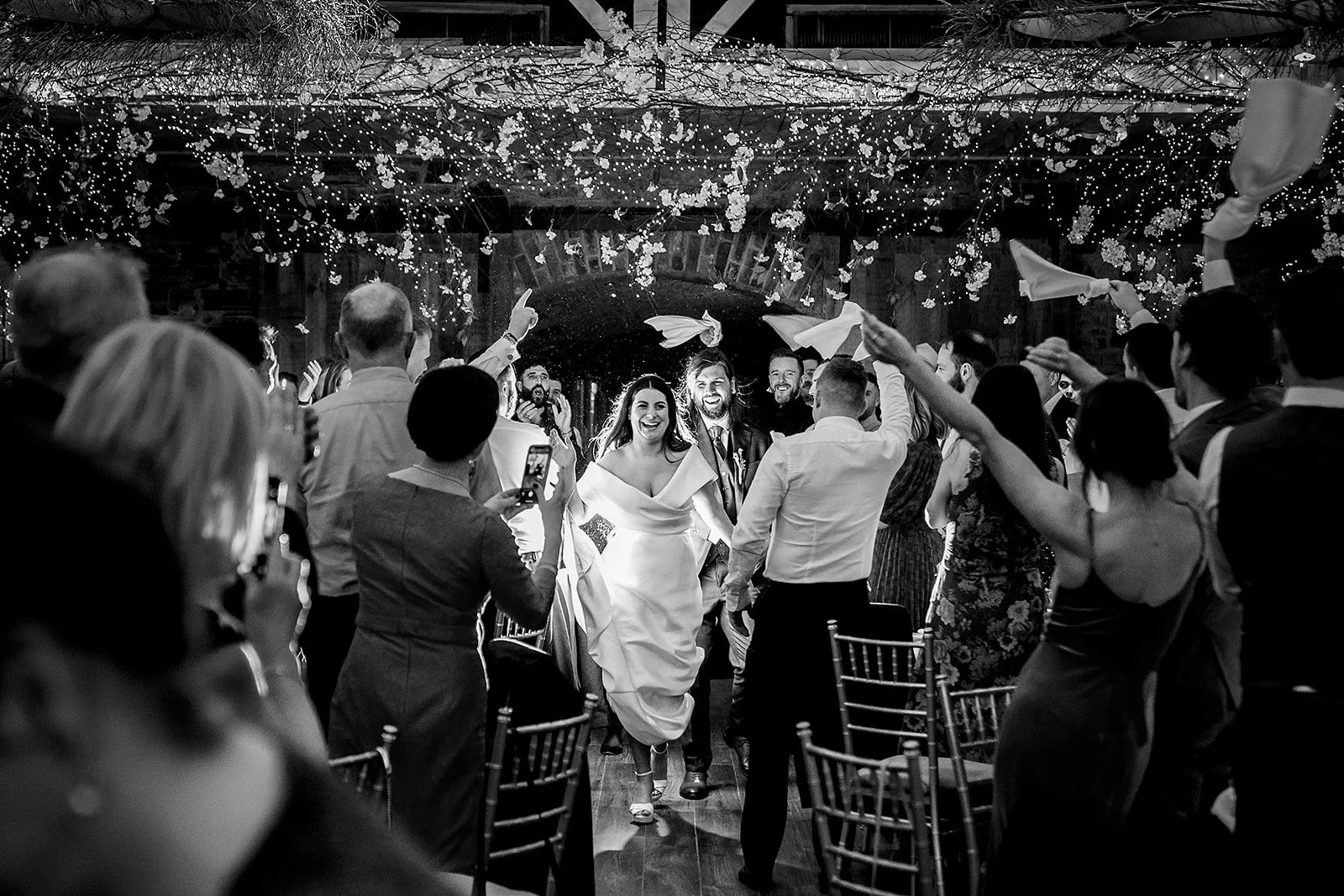
If you have started looking for a wedding photographer, you have probably noticed that everyone describes their work differently: documentary, editorial, fine art, traditional. The words blur together fast, and photographers are not always honest about what actually separates them.
A documentary photographer might tell you posed photos look staged or fake. An editorial photographer might tell you documentary work is lazy, or that the photos are ugly. Both are wrong.
These styles exist because couples want different things. I shoot documentary, and I will say so plainly, but I want this to be a fair guide rather than a sales pitch. By the end you should know what you want and which style delivers it. Later I will also tell you where documentary is the wrong choice.
Traditional wedding photography
Traditional photography can get written off as old fashioned far more than it deserves.
What it does well:
It produces clear family records that become more valuable as the years go on.
It reassures couples that the key moments will not be missed.
It suits large, family focused weddings.
Where it can let couples down:
It can interrupt the natural flow of the day.
Some images end up feeling like a checklist rather than a memory.
People who dislike being photographed can feel uncomfortable.
The photographs can feel detached from the emotion that was in the room.
Choose traditional if certainty matters most to you. What you give up is the unguarded moment
Editorial wedding photography
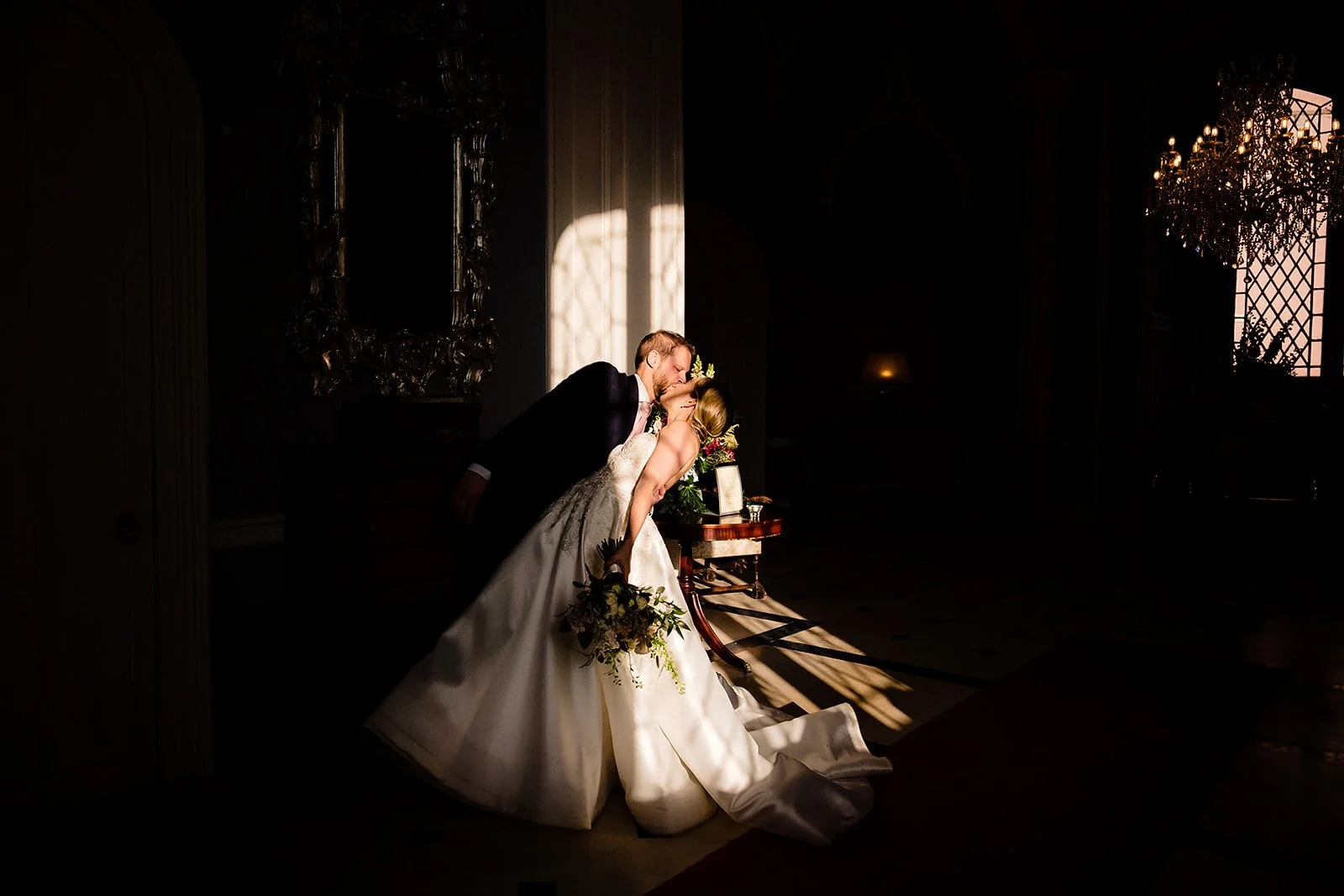
Editorial wedding photography has exploded in popularity, mostly because social media rewards beautiful imagery.
What it does well:
It produces polished, striking photographs.
It creates images that look like they belong in a magazine.
It makes couples feel glamorous.
It can produce strong portraits regardless of the venue conditions.
It delivers visual consistency from start to finish.
Where it can let couples down:
Those images often take a lot of direction.
Couples can spend more of the day making photographs than living it.
The gallery can favour how things look over what happened.
Some images look stunning but tell you little about who the couple are.
Editorial gives you the glamour. It can also turn your wedding into a photoshoot, and a beautiful gallery does not always tell you much about the couple in it.
Fine art wedding photography
Fine art is the hardest style to pin down, because it varies so much from one photographer to the next. Broadly, it leans on composition, light, symbolism and creative interpretation.
What it does well:
It produces unique, artistic images.
It creates photographs that feel timeless rather than tied to a trend.
It can turn an ordinary scene into something extraordinary.
It appeals to couples who think of photography as art rather than documentation.
Where it can let couples down:
The photographer's vision can start to matter more than the experience.
Moments get sacrificed in pursuit of a beautiful frame.
Couples can end up as subjects inside a piece of art rather than the centre of their own story.
Fine art lives or dies on the photographer's eye, which is both the appeal and the risk.
Documentary wedding photography
Most people misjudge documentary work. They think it is about authenticity. It is really about memory.
Good documentary photography captures things you never knew happened: the father standing alone and nervous before the ceremony, the flower girl gazing up during the speeches, a glance between two grandparents, a laugh that lasted half a second.
The style is built for emotion, relationships, storytelling and personality. It preserves the things that grow more meaningful the further you get from the day. The best documentary images are rarely the most polished. They are the ones that drop you straight back into the moment.
I have won awards from This Is Reportage and Fearless Photographers, all for documentary work, so it is the style I think about most.
A real example
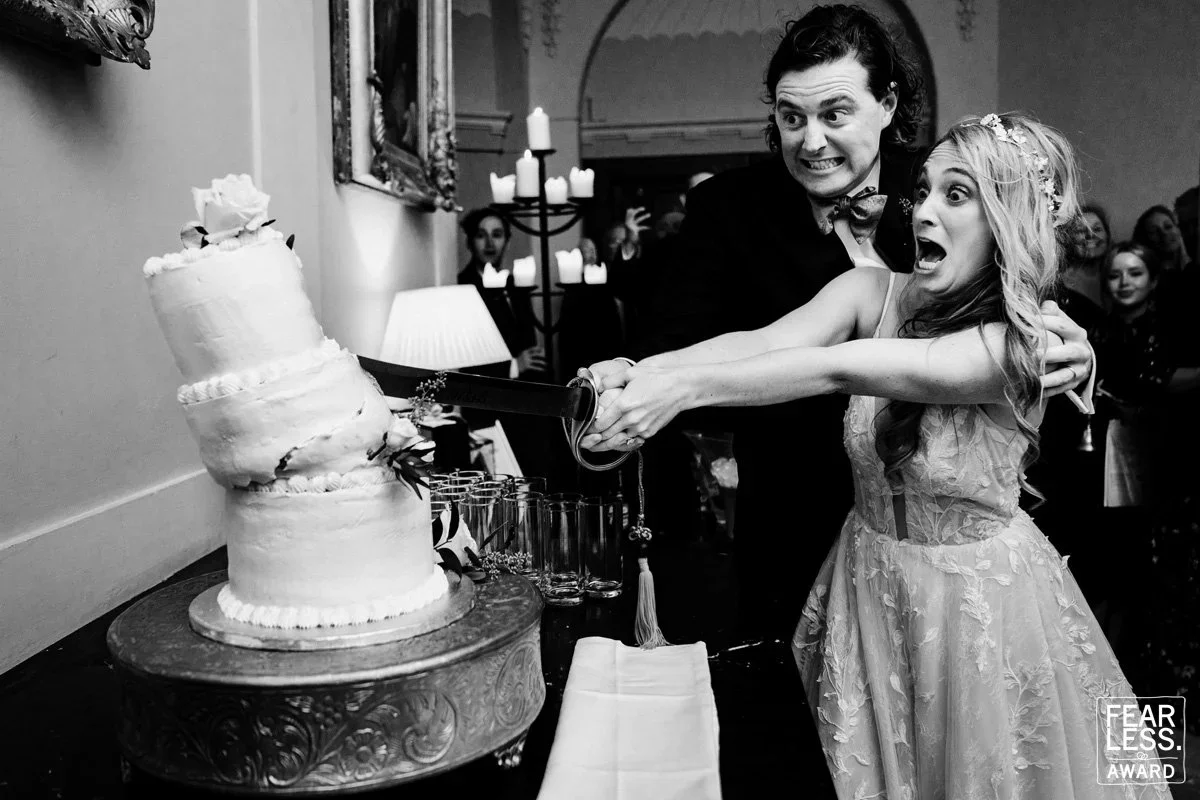
Cutting the cake happens at every wedding. It is a tradition, and it is almost always a set-up moment. The crowd gathers round, the couple stand and wait, and someone says go.
A classic photographer poses the couple, points them where to stand and shoots the clean version. I do the opposite. I watch for the in-between: the expressions, the small looks, what the crowd is doing.
At Kaitlynn and Buck's wedding at Slane Castle, the couple went to cut their cake and the whole thing collapsed. If I had been stood in the usual head on position, or if I had not been watching the scene carefully, the surprise of it could easily have stopped me shooting. I have seen it happen to other photographers, where the moment overrides the instinct and they freeze. My instinct is the reverse. I shoot a lot, and I am immediately moving to find the one frame that tells the whole story. That photograph only exists because nobody was being posed.
Where documentary photography falls short
Documentary is not better across the board. It is better at some things and worse at others.
The honest drawbacks:
You have less control over how you look in the photographs.
The photographer cannot manufacture a moment that never happens.
If the weather is awful, the venue is dark and nobody interacts, the photographer still has to work with reality as it is.
You will not come away with dozens of magazine-style portraits.
If you want guaranteed glamour, a pure documentary photographer is not your safest bet. What they can guarantee is honesty.
How much do I actually direct you?
People assume documentary means I hide in a corner all day and never speak to anyone. Most couples want me involved for at least two parts of the day, and I am happy to be.
The first is the family and group photos. These matter. You may never have that exact group of people in a room together again, and I agree with the value they hold. I have to direct them, or it turns into chaos and nobody knows where to stand or when to blink. My priority is one good frame of each group the couple asked for, everyone present, eyes open, looking good, then move on. I keep it efficient so it never becomes a production and everyone is back enjoying the wedding fast.
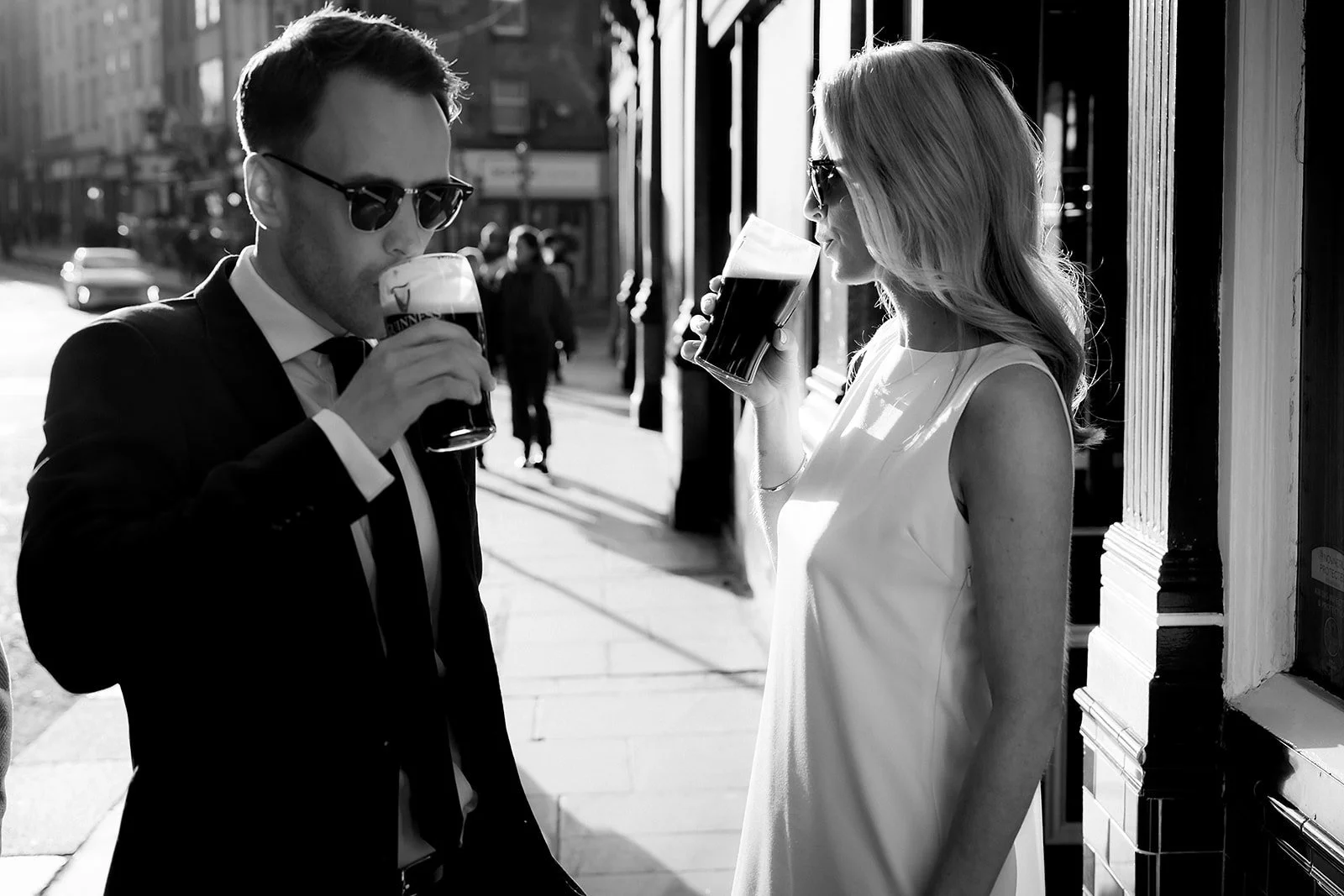
The second is the couple shoot, when a couple wants one. I usually take about twenty minutes, somewhere that uses the venue around you, and get a few natural photos of the two of you. I direct these, but mostly I am trying to get you to relax and be with each other. I do not fuss over poses. I want a few well-composed photos of you both, at ease.
Here is what I hope for at every wedding, though. I hope the photos you end up loving most are not these ones. I hope they are the ones you never knew I was taking.
One more thing. The afternoon is not always when the best light shows up. So I often tell couples that if I spot interesting light or a composition later in the day, I might grab you for a quick photo. Five minutes of beautiful evening light beats twenty minutes of flat two o'clock sun, and those are almost always the more interesting frames.
Who documentary photography is not for
If I am being honest about who I am the right fit for, I have to be honest about who I am not. A pure documentary photographer may be the wrong choice if you:
Want to be directed. Some people genuinely feel more comfortable when someone tells them what to do, and they enjoy the experience of being guided and posed. A documentary approach can leave them feeling unsupported.
Have a strong fashion led vision. If your inspiration board is full of luxury fashion campaigns and dramatic portraits, you will probably be happier with an editorial photographer.
Care more about the final images than the experience. This is not a criticism. Some couples are mainly investing in beautiful photographs and others are investing in preserving memories. Those are different goals.
The biggest misconception about documentary photography
The biggest misconception is that the photographer does not do much.
A lot of couples picture documentary photography as standing in a corner, waiting for things to happen. It is the opposite of passive. Through the day I am anticipating moments, reading body language, working out who matters to whom, positioning myself before things unfold, judging what is emotionally significant in real time, and building enough trust that people behave naturally around me.
Both styles take just as much effort. The difference is where it goes. An editorial photographer puts the work into making moments. A documentary photographer puts it into spotting them.
So which style is right for you?
No style is objectively better than the others. Anyone who tells you otherwise is selling. One question sorts most of it out: do you want photographs that show how your wedding looked, or how it felt?
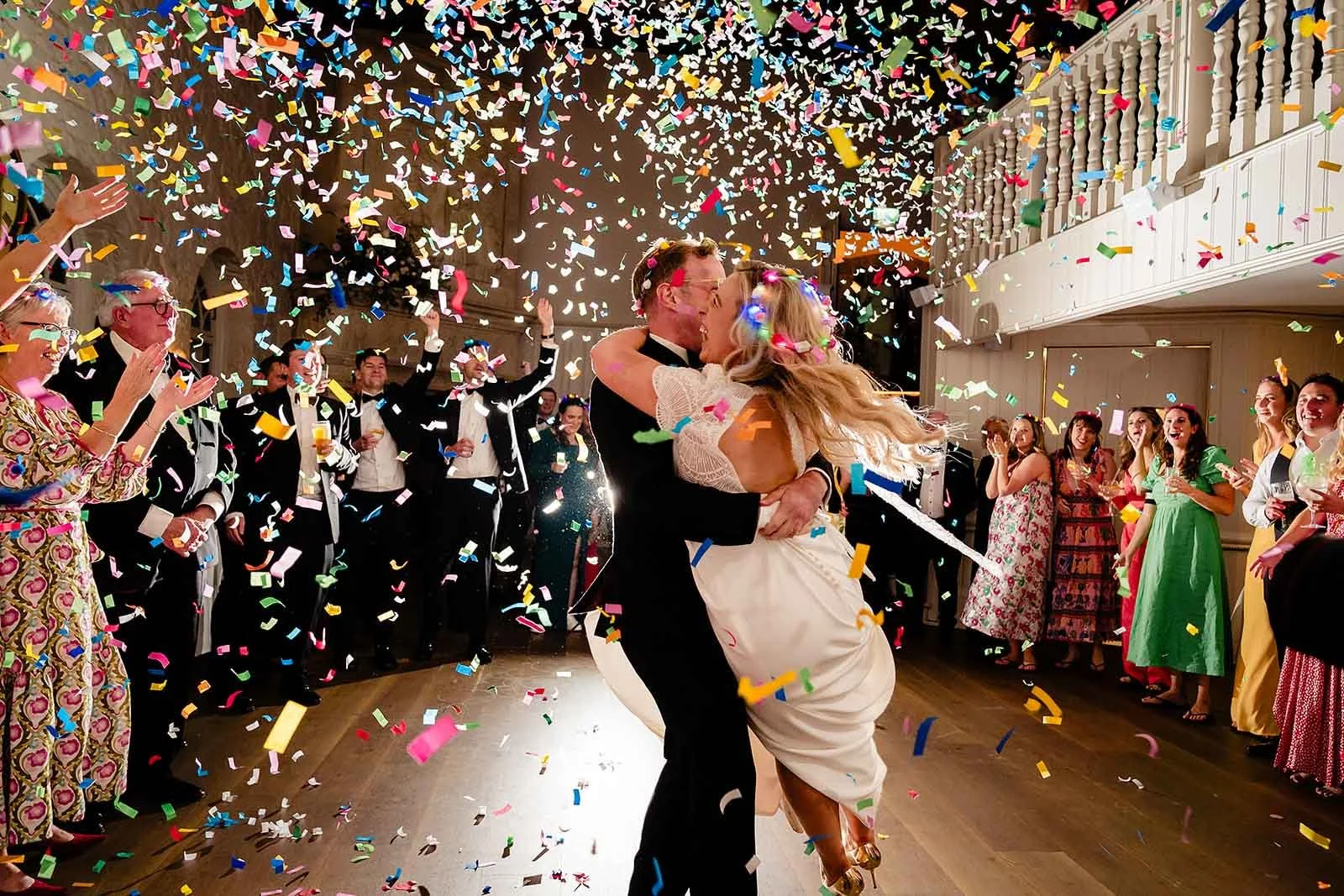

If it is how it looked, an editorial or fine art photographer might suit you best. If certainty and full family coverage matter most, traditional is a safe choice. If it is how it felt, the unrepeatable moments and the way the day unfolded, that is where documentary separates itself. Not by making better images, but by preserving a different kind of memory.
If that is the kind of memory you are after, that is exactly the work I do. You can see how it plays out across a full day on my documentary wedding photography page, or read more about working with me as a documentary wedding photographer in Ireland.
Frequently asked questions
What is documentary wedding photography?
Documentary wedding photography means capturing your day as it actually happens, without staging or directing the moments. The photographer anticipates and records real emotion and interaction rather than posing it, so the gallery reflects how the day genuinely unfolded.
What is the difference between documentary and editorial wedding photography?
Editorial photography is about creating polished, magazine style images, which usually takes direction and posing. Documentary photography is about recognising and capturing moments that are already happening. One prioritises how things look, the other prioritises what actually occurred.
Do documentary photographers take family photos and portraits?
Yes. Most documentary photographers, myself included, direct the family group photos and a short couple portrait session, because those images matter. The aim is to do them efficiently and naturally, then let the rest of the day happen on its own.
Is documentary wedding photography right for me?
It is a strong fit if you want your photos to capture how the day felt and you are happy not to spend hours posing. It may not suit you if you want to be guided throughout, you have a strongly fashion led vision, or beautiful directed portraits are your single biggest priority.
Which wedding photography style is best?
There is no objectively best style. The right one depends on whether you most want photographs that show how your wedding looked or photographs that show how it felt.